Home arrow Traffic and Safety arrow Injuries occur from poorly designed automobile seats


Car News

Car Warranties

Car Security System

Car and Accessories

Injuries occur from poorly designed automobile seats

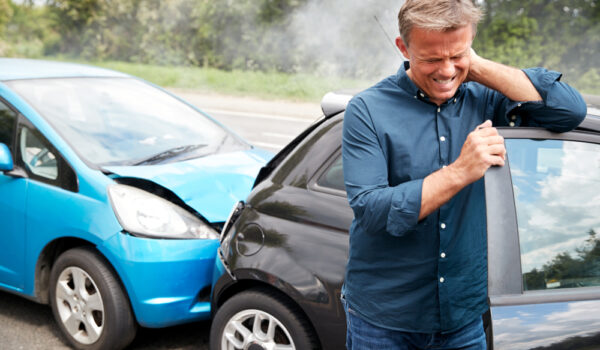
Preventable injuries occur in rear-impact collisions as a direct result of poorly designed automobile seats.

Summary

As a direct result of weak and defective designs of automobile seats and their components, such as seatbacks, recliner mechanisms and seat tracks, thousands of otherwise preventable injuries occur each year in rear-impact collisions. The problems with seats stem from an inadequate Federal Motor Vehicle Safety Standard, caused in part by the resistance of some manufacturers to reasonable and safer proposed standards. Likewise, the history of seatback design evolution shows an industry ignoring its own engineers by rejecting inexpensive safe alternative designs that have been available for decades.

The Seatback as an Occupant Restraint System

While the structure of the vehicle itself is a significant factor in protecting passengers from collision injuries, the safety of a motorist is more dependent upon adequate occupant restraint. The seat is essentially an occupant restraint. Much like the seatbelt system prevents an occupant from moving forward in a frontal collision, the seat should perform the same function in a rear-impact collision, and prevent the occupant from striking the interior of the vehicle or being ejected.

Fig: Preventable injuries occur in rear-impact collisions as a direct result of poorly designed automobile seats.


Federal Motor Vehicle Safety Standard 207

On December 3, 1966, the National Traffic Safety Administration, precursor to the National Highway Traffic Safety Administration (NHTSA) issued a notice of proposed rulemaking regarding the initial Federal Motor Vehicle Safety Standard (FMVSS) for seat anchorage -- FMVSS 207. The notice proposed a standard to establish requirements for seats, their attachment assemblies, and their installation "to prevent failure and dislocation by forces acting on the seat as a result of vehicle impact."

The Federal standard for seat strength is more than 30 years old. It has never required that manufacturers test car seats in a crash test. The required test--a block that presses at about 3,300 lbs.--has been widely criticized in the automotive safety community since its inception. It does not represent an improvement over earlier designs, and in fact, production seats from the 40's and 50's have been found to substantially exceed this standard. Tests in recent years have shown that the standard is so weak, an aluminium lawn chair can pass it. Ironically, the rear barrier impact crash testing required by FMVSS 301, the standard for fuel system integrity, demonstrates the inadequacy of most seatbacks. During FMVSS 301 rear impact tests at 30 mph, almost all bucket seatbacks and split bench seatbacks fail and strike the rear seats. Some manufacturers readily concede that their seatbacks are not designed to withstand dynamic rear sled or moving barrier tests at 30 or 35 mph, such as those encountered in NHTSA 30 mph compliance and NCAP 35 mph tests.

As a result, seats and their components suffer a variety of failure modes in rear-impact collisions including breakage of seat adjusters, breakage of folding seatback locks and supports, or separation of the anchorage from the vehicle.

Although designed fundamentally for frontal accidents, seatbelts assist in rear impact accidents to prevent occupants from sliding up the seatback. If seatback failure occurs, the use of the occupant's restraint system may not prevent the occupant from being ejected from the vehicle. In one study of 23 rear impact accidents involving front seat collapse, it was found that a majority of restrained front seat occupants were either partially or totally ejected from the seat systems during impact, even at changes of velocity as low as 18 mph or less.

The potential problems of the failure of automotive seat systems were best summarized by Dr. Kenneth Saczalski, an expert on automotive seat safety:

  1. Loss of vehicle control by a driver when the seatback collapses rearward in an uncontrolled manner during a rear impact;
  2. Reduced effectiveness of the restraint system when the collapsed seatback allows the front seat occupant to rotate and slide rearward from under the lap belt during a rear impact, thus enabling potential injurious contact with rear seat objects and passengers;
  3. Ejection of occupants who have slid out from beneath their lap and shoulder harness system...;
  4. Injury to rear seat passengers who are likely to be struck by the violent rearward motion of the front seat occupant collapsing into their rear seat passenger area...;
  5. Reduction or loss of egress capabilities of rear seat passengers whose bodies are likely to be trapped under the plastically deformed and collapsed front seatbacks...;
  6. Injury to fully restrained front seat passengers during a frontal impact when the seatback easily collapses from the rear loading of a lap belted or unrestrained rear seat passenger (or heavy object) ..."

In some cases occupants in the rear seat are killed as a result of seats in front of them, loaded with a passenger, collapsing onto them. The National Highway Traffic Safety Administration estimated that in 1990 alone 1,100 people died and 1,600 more sustained serious injuries because their seats collapsed rearward in rear-impact collisions.

Proposed Solutions and Alternative Designs

Almost three decades ago vehicle safety researchers recommended that seatback strength be increased to 100,000 in.-lb, and that seatback deflection should be limited to ten degrees rearward under 30 g collision conditions. Another study called for a seat strong enough to protect against 40 g loads. Recommendations such as these were based upon accident data, as well as full-scale crash testing, and research going back 50 years which shows that human tolerance to rear-impact collisions is as much as 40 g's.

All of the major automakers have conducted tests that show the need for better seats and how to build them. Still, more than ten years after NHTSA said it would strengthen Federal requirements, the agency has not acted.

Conclusion

Until reasonably safe collision performance requirements become a part of FMVSS 207, some auto manufacturers will continue to resist efforts to eliminate the defects. In the meantime, thousands of people will suffer catastrophic and fatal injuries which are preventable and avoidable. In the absence of a realistic Federal standard, motorists must count on automotive safety experts and product liability litigation to encourage manufacturers to build reasonably safe seats.

 
Comments
Write comment
Name:
Title:
Please input the anti-spam code that you can read in the image.
 
< Prev   Next >